
From Western to the Wild Front Lines
How a Western grad found his calling in the vast, unpredictable world of the National Park Service
Erik Westpfahl didn’t set out to build a career in national parks or federal law enforcement. His path took shape gradually—through Western Technical College, steady field experience, and a willingness to follow opportunity as it appeared.
Police Basic Training came first, followed by EMT certification, Police Science, and later, Paramedic training. The route wasn’t linear, but together it formed a rare and powerful combination: law enforcement paired with advanced emergency medical care. One lesson stayed with him. During a defensive tactics session, Western guest instructor Dan Marcou offered a simple directive: Be nice. Until it’s time not to be. Then be nice again. It wasn’t called de-escalation at the time, but the principle was clear—resolve situations decisively without losing your humanity.
Westpfahl’s connection to Western runs deeper than his own coursework. His uncle, Rich Westpfahl, was a well-respected dean at the College, part of a broader family legacy rooted in public service across the La Crosse region. That sense of responsibility—to people, to place, to doing the work well—echoed through Westpfahl’s own training and career choices.

Today, Westpfahl is a chief law enforcement ranger with the National Park Service, based at Fire Island National Seashore. One of only a handful of rangers nationwide certified as both a law enforcement officer and a paramedic, his work spans emergency response, leadership, and the protection of some of the country’s most treasured landscapes. The work often unfolds far from public view. Rangers coordinate rescues, respond to medical emergencies, fight fires, manage overdoses, and de-escalate conflicts across thousands of acres of rugged terrain—places most people experience only as visitors. It’s a role that demands judgment, adaptability, and a steady presence in moments that rarely come with warning.
The moment that first sharpened Westpfahl’s sense of what that work could look like came in 1999. He and his wife, both EMTs at the time, responded to a rollover crash near Carlsbad Caverns National Park. They were first on scene. Shortly after, a National Park ranger arrived—driving a police-issue Camaro, wearing a law enforcement uniform, and stepping seamlessly into the medical response. The ranger was also the chief.
Westpfahl was struck by the scope of it all. Here was a single officer operating within an entire ecosystem of responsibility—law enforcement authority paired with medical expertise; command presence paired with hands-on care. Until that moment, he hadn’t fully understood that park rangers could hold both roles at once. The idea stayed with him, in the background, reshaping how he thought about a future in public service.
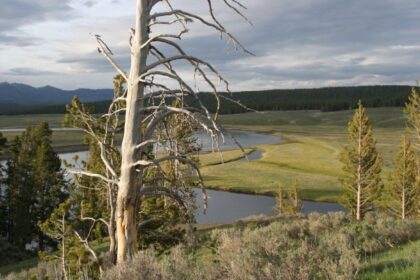
Years later, that early impression began to take form. After completing Western’s Paramedic program and graduating from the National Park Service law enforcement academy, Westpfahl accepted a seasonal assignment at Yellowstone. More followed—Lake Mead National Recreation Area, Carlsbad Caverns, and eventually Fire Island—each role expanding his scope, sharpening his leadership skills, and reinforcing the value of being able to move fluidly between enforcement, emergency care, and command.
Two decades after that roadside moment, Westpfahl returned to Carlsbad Caverns—this time as chief ranger. When he left the post, his team presented him with a framed photograph: the Camaro that first caught his attention, parked beside his own Dodge Charger in the same location. He doesn’t dwell on symbolism, but the full-circle moment was not lost. Park law enforcement often surprises people. Rangers don’t simply patrol trails or issue citations. They respond to medical emergencies, coordinate complex rescues, fight fires, and manage high-risk situations where patience and judgment matter as much as authority.
After nearly two decades with the National Park Service, Westpfahl has learned to hold complexity with steadiness: the beauty of a landscape, the responsibility of command, and the impact of a single conversation. His advice to Western students reflects that perspective—stay flexible, learn from every experience, and invest in yourself early.
The most meaningful careers rarely begin with a master blueprint. Sometimes they start with a class, an instructor who leaves a mark, a moment that sticks—and the courage to follow where it leads.